
CO2 Laser Resurfacing Explained
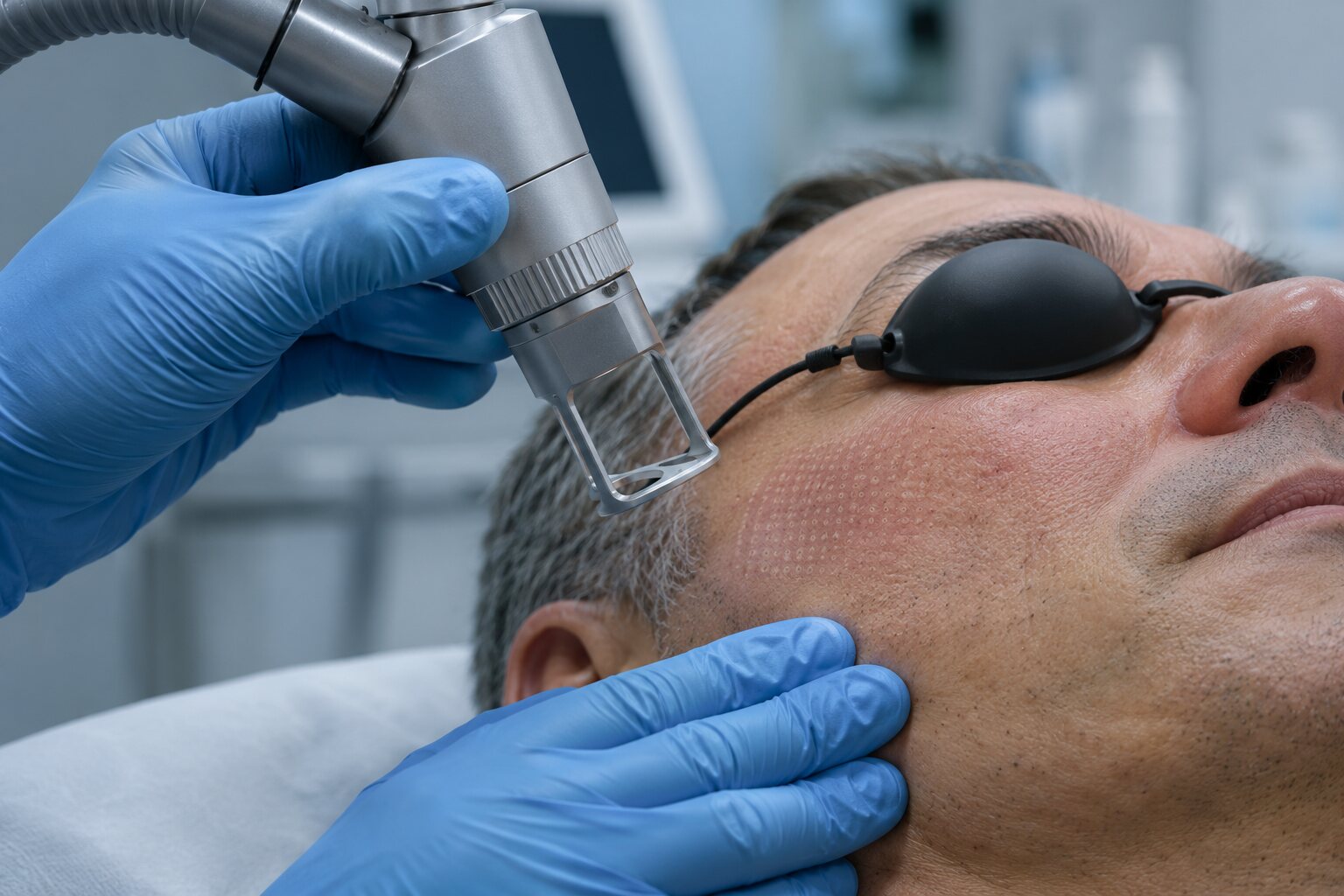
Carbon dioxide laser resurfacing removes thin layers of skin to change how the surface looks and feels. The American Society of Plastic Surgeons says the laser beam used in laser resurfacing removes the outer layer of skin, called the epidermis. The same source says the beam simultaneously heats the underlying dermis, which stimulates growth of new collagen fibers.
What the CO2 label does and does not tell you
Cleveland Clinic says a newer generation of CO2 laser resurfacing uses ultrapulsed light or continuous beams delivered in a scanning pattern to remove thin layers of skin very precisely. It puts recovery time with CO2 laser resurfacing at up to two weeks.
CO2 names the light source. It does not say how much skin is treated at once or how long healing takes. Those details sit in the other words people use for the same service, and the pages below take them one at a time.
For a general overview, the American Society of Plastic Surgeons keeps a page on laser skin resurfacing. Readers curious about treatment beyond the face can look at a paper in PMC on nonfacial skin rejuvenation of the neck, chest and hands using laser techniques.
Child pages sorted by the question they settle
- How do the laser types differ? Ablative Versus Fractional Lasers for Skin sets the two descriptions side by side.
- How long until the skin heals? Recovery Weeks After Ablative Laser Treatment compares the healing ranges two sources give.
- What does it cost and what can go wrong? Costs and Safety of CO2 Laser Treatment reports the published figures and side effects.
Which page fits your decision
If a menu offers several laser names, begin with the types page. If your calendar is the constraint, begin with recovery. If the price is the hurdle, begin with costs and safety, then return to the others.